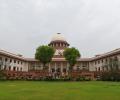
The Supreme Court of India is hearing petitions related to discrimination against women at religious places, including the Sabarimala temple in Kerala, and the scope of religious freedom practised by multiple faiths.

The Supreme Court of India has dismissed the use of information from 'WhatsApp University' as evidence in a case concerning religious freedom and discrimination against women at religious sites, including the Sabarimala Temple.
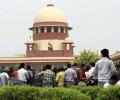
The bench will be headed by Justice N V Ramana and also comprise Justices S K Kaul, R Subhash Reddy, B R Gavai and Surya Kant.

A unanimous decision was taken by the 30 judges of the apex court in the full court meeting headed by Chief Justice of India U U Lalit held on Tuesday evening to implement an apex court verdict of 2018 in the Swapnil Tripathi case.
The Centre has asked the Supreme Court to reconsider its judgements decriminalising adultery and same-sex relationships, arguing they were based on a subjective application of 'constitutional morality'.
Constitutional questions referred to larger benches of the Supreme Court long ago have literally gathered dust, says M J Antony

The Supreme Court, using its extraordinary powers under Article 142, has quashed the conviction of a man sentenced under the POCSO Act. This decision came after the victim, who was a minor at the time of the offence, married the accused upon reaching adulthood. The court emphasised that this ruling is based on the peculiar facts of the case and should not be considered a precedent.

Less than two months after ending the TMC's 15-year rule in the state, the BJP government is expected to table one of its most ambitious and politically sensitive promises, setting the stage for what could become the first major ideological confrontation of the post-election period.
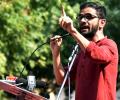
The Supreme Court granted interim bail to two Delhi riots accused, while addressing concerns about conflicting views on bail under the Unlawful Activities Prevention Act (UAPA). The court referred the question of law on whether prolonged incarceration can override UAPA restrictions to a larger bench.
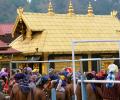
The Supreme Court is hearing petitions related to discrimination against women at religious places, including the Sabarimala temple. A nine-judge bench is examining the scope of religious freedom and the exclusion of women based on age and menstrual status.

The Centre has informed the Supreme Court that the restriction on women of menstruating age entering Kerala's Sabarimala temple is a matter of religious faith and denominational autonomy, falling outside the purview of judicial review. Solicitor General Tushar Mehta argued that courts should not apply 'secular standards of reason' to religious practices.
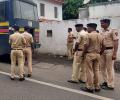
Retired Judge Gautam Patel and his family, getting threatening letters over his 2024 verdict on the succession row in the Dawoodi Bohra community, have been provided police protection, the Maharashtra government on Monday told the Bombay high court.

The Delhi High Court has upheld the Indian government's decision to temporarily restrict access to Telegram, citing the messaging app's capacity for 'automated dissemination' of large content, which could facilitate misinformation during the crucial NEET-UG retest.

An FIR has been registered against former West Bengal chief minister and TMC supremo Mamata Banerjee for allegedly making provocative remarks during the last assembly poll campaign, with a complaint stating her comments were 'capable of promoting enmity between communities'.

The Supreme Court has agreed to hear a plea on May 29 seeking a direction to the Nagpur Parsi Panchayat to treat a Parsi woman equally with her male counterparts, even after she marries a person of another faith, challenging a rule that allegedly strips Parsi women of their religious identity upon inter-faith marriage.
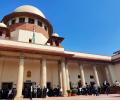
Similarly, 2,209 writ petitions, 2,870 public interest litigations, 4,331 special leave petitions and 1,295 contempt of court cases were pending in the top court as on December 13.

The pleas challenging SIR claimed that the Election Commission does not have powers under Article 326 of the Constitution, the Representation of the People Act, 1950 and the Rules made under it to carry out SIR in a larger form.
The Supreme Court has expressed strong displeasure over statements made by politicians regarding the Shiv Sena symbol row case, cautioning them about making irresponsible comments.

The Supreme Court of India has asserted its jurisdiction to determine what constitutes a superstitious practice within a religion, during a hearing on petitions related to discrimination against women at religious sites.
Solicitor General G Vahanvati pleaded that the two-judge bench cannot adjudicate the matter as it involved substantive question of Constitutional law.
The Allahabad High Court has expressed strong displeasure over the delay in the release of funds to NGO-run juvenile homes operating under the Mission Vatsalya scheme, warning of action if a solution is not presented by May 29.
The Supreme Court has reaffirmed that bail is the general rule, even in cases registered under the Unlawful Activities (Prevention) Act (UAPA), while granting bail to an accused in a narco-terror case.

The Supreme Court has ruled that national sovereignty takes precedence over personal liberty, particularly in cases involving drug trafficking and psychotropic substances. The ruling came as the court overturned a High Court order granting bail to an accused drug trafficker.

The Supreme Court on Thursday agreed to list for hearing a PIL filed by former Rajya Sabha lawmaker Subramanian Swamy seeking a direction to the Centre to declare the Ram Setu as a national heritage monument.

There has never been a woman Chief Justice of India, although Justice B V Nagarathna is expected to become the first -- in 2027 if the convention of seniority is followed.

A bench of Chief Justice J S Khehar and Justice D Y Chandrachud said the parties should appear before the Constitution bench and formulate issues to be taken up for the hearing.

A bench headed by Chief Justice N V Ramana said it would take a call by Monday on referring the matters related to the recent Maharashtra political crisis to a Constitution Bench.
The Supreme Court of India has directed all states and Union territories to operationalise a single helpline number '112' for emergency responses and establish a functional good samaritan grievance redressal system within three months, emphasising that the right to trauma care is an integral part of the right to life.
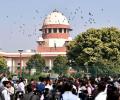
Among the important five-judge bench matters which have been listed is a plea challenging the (One hundred and third amendment) Act, 2019 which provided reservation to Economically Weaker Sections, the challenge to WhatsApp privacy policy, and the issue of Parliamentarian or legislator claiming immunity from criminal prosecution for taking a bribe to give a speech or vote in the house.

Attorney General K K Venugopal told a bench headed by Justice Bobde that the Constitution (103 amendment) Act, 2019 granting 10 per cent reservation to EWS is intended to uplift around 200 million people who are still below the poverty line.
The Supreme Court of India has upheld the Election Commission's documentation framework for the Special Intensive Revision of electoral rolls, affirming the commission's authority and stating that Aadhaar is not proof of citizenship.

The Supreme Court has sought responses from the Centre and States regarding a plea alleging the misuse of Aadhaar cards as proof of citizenship, domicile, and residential address. The petition argues that despite legal provisions, Aadhaar is being used for purposes beyond identity verification, potentially aiding illegal immigrants, and calls for a comprehensive overhaul of electoral verification processes.
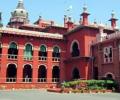
The Madras High Court acknowledged the existence of corruption within the judiciary while dismissing a PIL seeking a ban on the Tamil film 'Karuppu'. The court emphasised the need for introspection and improvement within the judicial system, stating that judges are not exempt from criticism.
A three-judge bench framed various questions, including as to whether right to privacy is a fundamental right, to be decided by the larger Constitution Bench.

The Supreme Court of India has permitted euthanasia for rabid, incurably ill, or demonstrably dangerous stray dogs to mitigate the threat to human life. The ruling includes several directives to manage the rising stray dog population, emphasising public safety and animal welfare.
A five-judge Constitution bench of the Supreme Court is scheduled to commence a crucial hearing from Tuesday on a batch of pleas challenging the validity of the electoral bonds scheme for funding political parties.

The Supreme Court has established a high-powered committee, chaired by Kanchan Devi, Director General of the Indian Council of Forestry Research and Education (ICFRE), to independently review the Centre's report on the definition and delineation of the Aravalli hill range, aiming to resolve 'critical ambiguities' in its findings.

The Supreme Court has directed the preparation and implementation of a time-bound eviction plan to address encroachments within the protected areas of the Agasthyamalai ecological landscape in Tamil Nadu, also ordering action against government servants involved.

The Supreme Court on Tuesday said it will consider whether the pleas challenging the validity of the electoral bond scheme for political funding of parties can be referred to a Constitution bench for an "authoritative pronouncement".
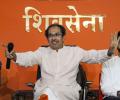
A five-judge Constitution bench of the Supreme Court on Wednesday said it will hear on September 27 an application by the Uddhav Thackeray-led faction seeking to restrain the Election Commission from deciding on the claim of Maharashtra Chief Minister Eknath Shinde-led group over the "original" Shiv Sena.
